
The Shift to GEO & AEO: What Drupal Teams Need to Know
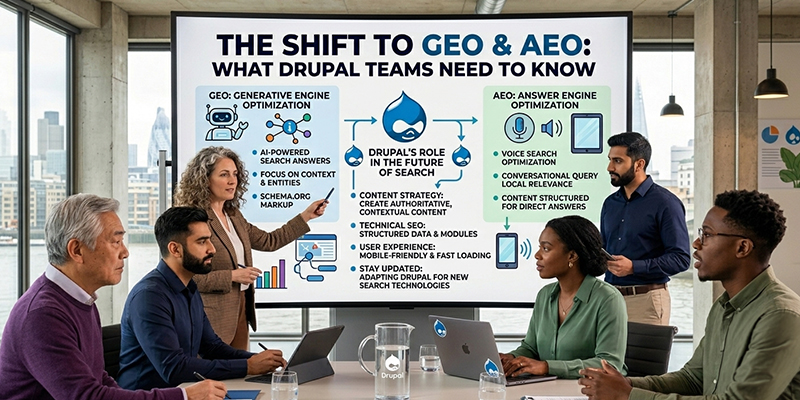
SEO has been the foundation of digital visibility for years, but as technology evolves, so must the strategies we use to ensure our content reaches its audience. Generative Engine Optimization (GEO) and Answer Engine Optimization (AEO) are two emerging methods that are reshaping the way content is discovered.
These strategies go beyond traditional SEO by focusing on how AI-driven systems interpret and surface content in real-time. For Drupal teams in organizations like universities, government agencies, and financial institutions, understanding and adapting to this shift is crucial.
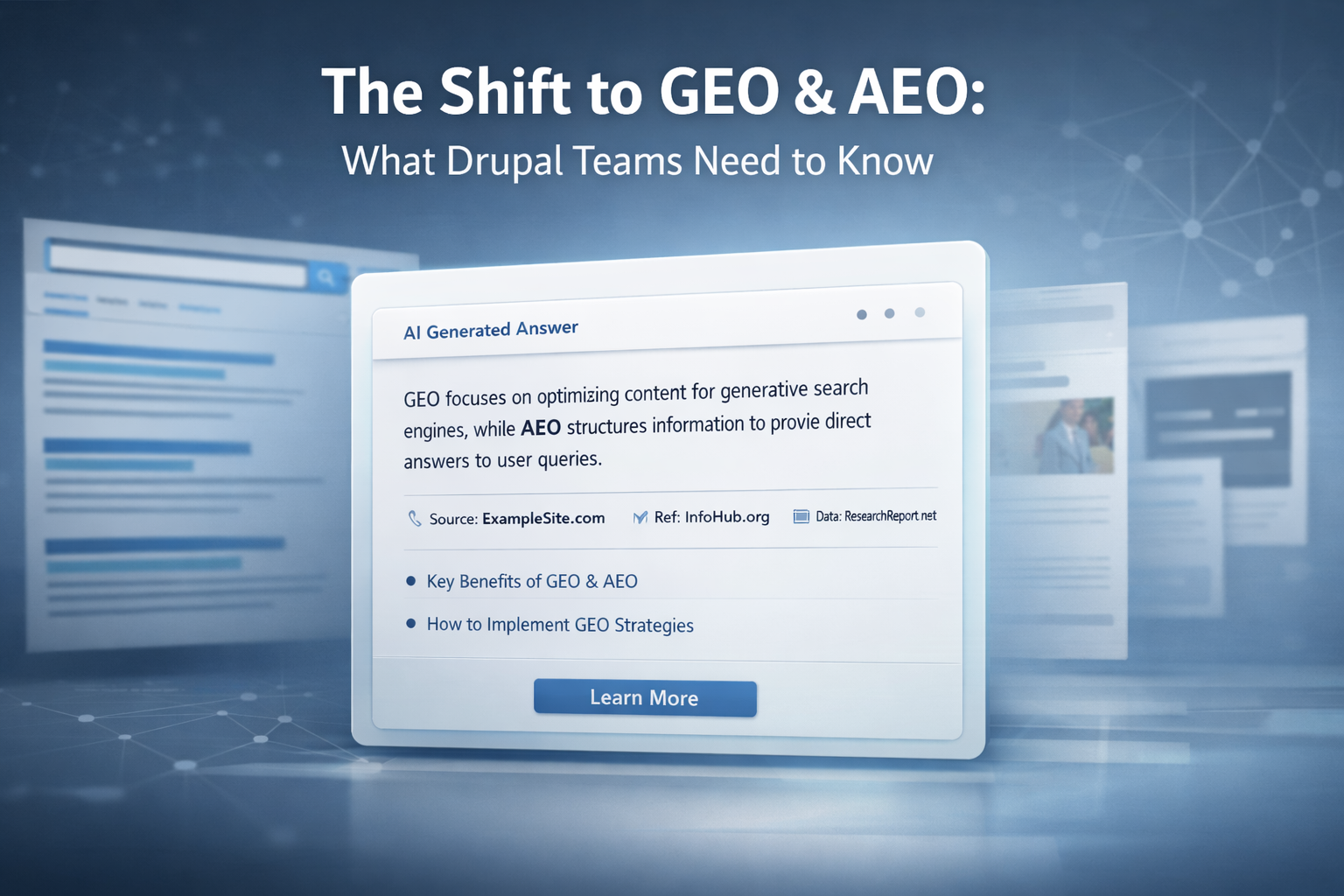
Learn how to optimize your Drupal site for AI search success.
As AI-driven systems continue to reshape how content is discovered and consumed, understanding GEO and AEO is critical for staying ahead. Our webinar, "Unlocking GEO & AEO Growth for Drupal," will show you how these strategies can revolutionize your content discovery, drive traffic, and enhance your engagement.
The Evolution from SEO to GEO and AEO
SEO was designed to optimize content for search engines, ensuring it ranked for specific keywords. However, the way content is discovered and consumed is changing. Today, AI-driven tools like Google’s AI Overviews, ChatGPT, and other generative systems provide users with direct answers to their questions, bypassing traditional search results. This shift is where GEO and AEO come in.
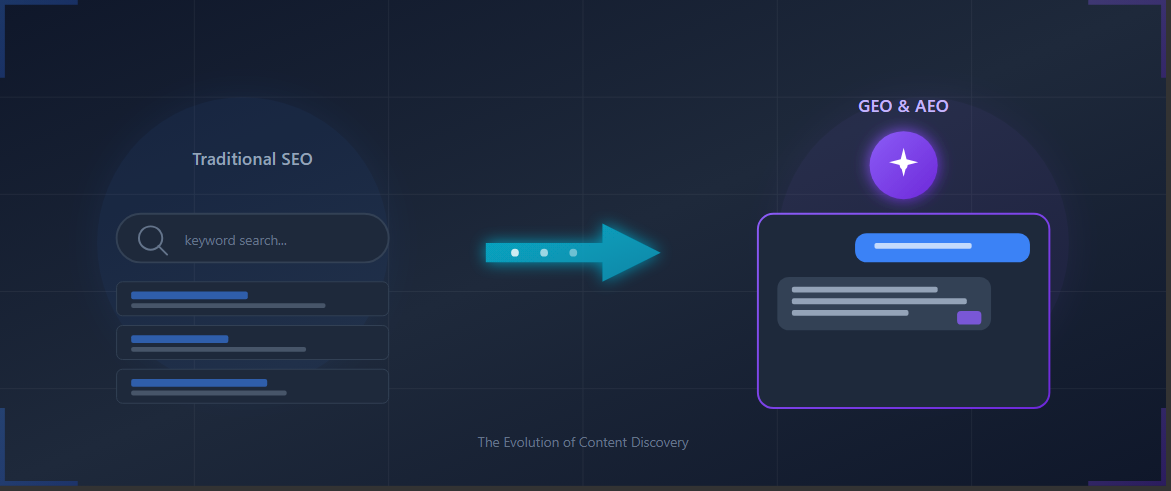
- GEO focuses on ensuring content is optimized for AI-driven systems that generate answers from a range of sources.
- AEO ensures content is structured in a way that makes it easily understandable and accessible for AI systems that summarize information and provide relevant answers.
This transition requires a new approach to content strategy, one that moves beyond keyword optimization and embraces structured, meaningful content that AI engines can cite.
Why This Shift Matters for Drupal Teams
As Drupal remains one of the most powerful content management systems, its flexibility makes it uniquely equipped for this transition. The advantages of optimizing for GEO and AEO are clear:
Increased Visibility in AI-Driven Search
AI systems prioritize content that is easily discoverable and understandable. By optimizing for GEO and AEO, Drupal teams can ensure that their content is not only found but also highlighted in AI-driven search results. For organizations in regulated sectors or those providing critical public services, increased visibility is key to reaching the right audience.
Answering User Queries Directly
AI systems today aim to provide answers, not just search results. GEO and AEO optimize content so that it can be used in these systems. For instance, government websites that optimize for AEO can expect their FAQs to be directly pulled and displayed as answers in Google AI Overviews. This ensures that critical public information reaches citizens more efficiently.
Future-Proof Your Content Strategy
As AI continues to change the way people search for and consume information, the content strategies that worked in the past will no longer be sufficient. GEO and AEO allow Drupal teams to future-proof their content strategy, ensuring that it is optimized for the next generation of search engines. For decision-makers in higher education, finance, and other institutions, this is essential for staying competitive and relevant in a shifting landscape.
Stay Ahead of the Competition
While many organizations are still adapting to AI-driven search, those who begin implementing GEO and AEO today will be ahead of the curve. This presents a significant opportunity for Drupal teams in industries like government or finance, where staying ahead in digital discovery can drive visibility and engagement.
Establishing Authority in the AI Space
Unlike traditional SEO, which focuses on ranking for specific keywords, GEO and AEO prioritize the intent behind the user’s search. By structuring content to answer specific questions and meet user needs, Drupal teams can provide better value to their audience. This shift requires a focus on clarity, relevance, and context rather than just keywords.
How Drupal Can Support the Shift to GEO and AEO
How Drupal Can Support the Shift to GEO and AEO
Drupal's modularity and flexibility make it an ideal platform for adapting to this shift, but that same modularity can create unexpected challenges when implementing GEO and AEO at scale. From structuring content to applying schema markup correctly, the decisions Drupal teams make at the configuration level can either amplify or undermine their visibility in AI-driven search.
The key areas to focus on include:
- Content Structure: Organize content in a way that AI engines can easily interpret. Use clear headings, structured data, and relevant keywords that directly align with user queries.
- Schema Markup: Implementing schema markup helps search engines and AI systems understand the content's context, making it easier to be discovered and cited by AI engines.
- Technical Optimization: Ensure that your Drupal site is fast, secure, and optimized for AI search. This includes implementing clean URLs, mobile optimization, and structured data.
While these pillars provide a strong foundation, knowing where Drupal's architecture helps and where it can work against you is what separates teams that gain AI visibility from those that don't.
Our webinar, "Unlocking GEO & AEO Growth for Drupal," dives deep into exactly this, covering real implementation scenarios, common pitfalls, and how to configure Drupal to work with AI-driven systems.
Final Thoughts
The organizations that succeed in the future of digital discovery will be those that embrace GEO and AEO as part of their content strategy. For Drupal teams, this means thinking beyond traditional SEO and focusing on how AI-driven systems will interact with their content.
Whether it’s enhancing visibility for government services, improving engagement for educational content, or providing critical information in the finance sector, GEO and AEO will play a key role in ensuring your content reaches its intended audience.
By adapting to these changes now, Drupal teams can secure a competitive advantage, future-proof their content, and position their organizations for long-term success in the age of AI-driven search.